Location and Schedule

Nourishing and nurturing our future through a shared teaching garden connecting people to food, heritage and community.

Located at 871 N. Cornell St. (1525 W.) Salt Lake City, Utah, 84116

Open Saturday mornings (Spring & Summer: 8 to 10; Fall 9-11) and Wednesday evenings (April-October 6 to dusk)

Saturday, January 3, 2015

2014 Season Wrap-Up

With winter officially here and a moment of "free" time, I can finally share an update.


Thank you to the Lowell Bennion University of Utah Day of Service!
Thank you to the Utah.gov United Way Day of Caring!
BEFORE 150 hours of help from 50+ volunteers

AFTER

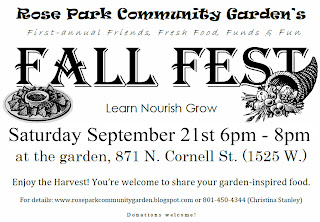
Annual Fall Fest Potluck


A Smorgasbord of Color & Flavor


Craft for Kids at Fall Fest

Two-thirds of our gardeners showing off some of the harvest

 
We harvested over 3,100 pounds of food, put in over 1,600 hours of our time, and harvested every month of the year.

Wednesday, August 27, 2014

The Key to Happiness

 A couple months ago, my second son lost our spare house key. We searched in the area where he heard it drop, but no luck. Then recently my third son pulled it out of a bag of compost while we were gardening at our school garden. Of course I couldn't pass up the symbolism. The key to our home was hidden in a bag of old life that had been turned into nutrients for new life. And we only found the key because we chose to add those nutrients to the garden together. I just heard today of a study saying that vegetables not only help your physical health, but your emotional health. To that finding I add my own observation: tilling, planting, watering, weeding, harvesting, cooking and eating our food together builds a foundation for happiness. The key? Using our past--the good and bad--to nourish a healthy today.
 Purple beans from the Children's Garden! Can you spot the hummingbird in our Texas Hummingbird Sage?


A variety of peppers, squash and tomatoes. We are also harvesting corn, melons, cucumbers, herbs, eggplant and more.

Still Growing Strong!

Work began whole hog in mid February and we are still going strong. Here are some recent pictures, including our 2nd annual Pioneer Party, held July 21st


Over 60 guests enjoyed this free event. Fiddle music, by one of our young gardeners, set the perfect tone for the evening. People of all ages enjoyed a variety of activities. We churned butter and sampled it on bread donated by Fiana Bistro. Local volunteers taught how to spin wool, make yarn dolls and save heirloom seeds. We played the clothespin drop and stick wrestling. To top it off we ate hand-churned ice cream, old-fashioned candy and watermelon donated by Smiths and a local candy maker. Of course we included the event that sparked this tradition: planting our pioneer crop. Why? In memory of the Mormon Pioneers who entered Utah in July of 1847, we plant near that date to see if we would have had food to eat, were we in their shoes (for those who still had them--and some eventually had to eat those too!)
.

Friday, February 21, 2014

A Game of Squash: You'd Butternut Cheat!

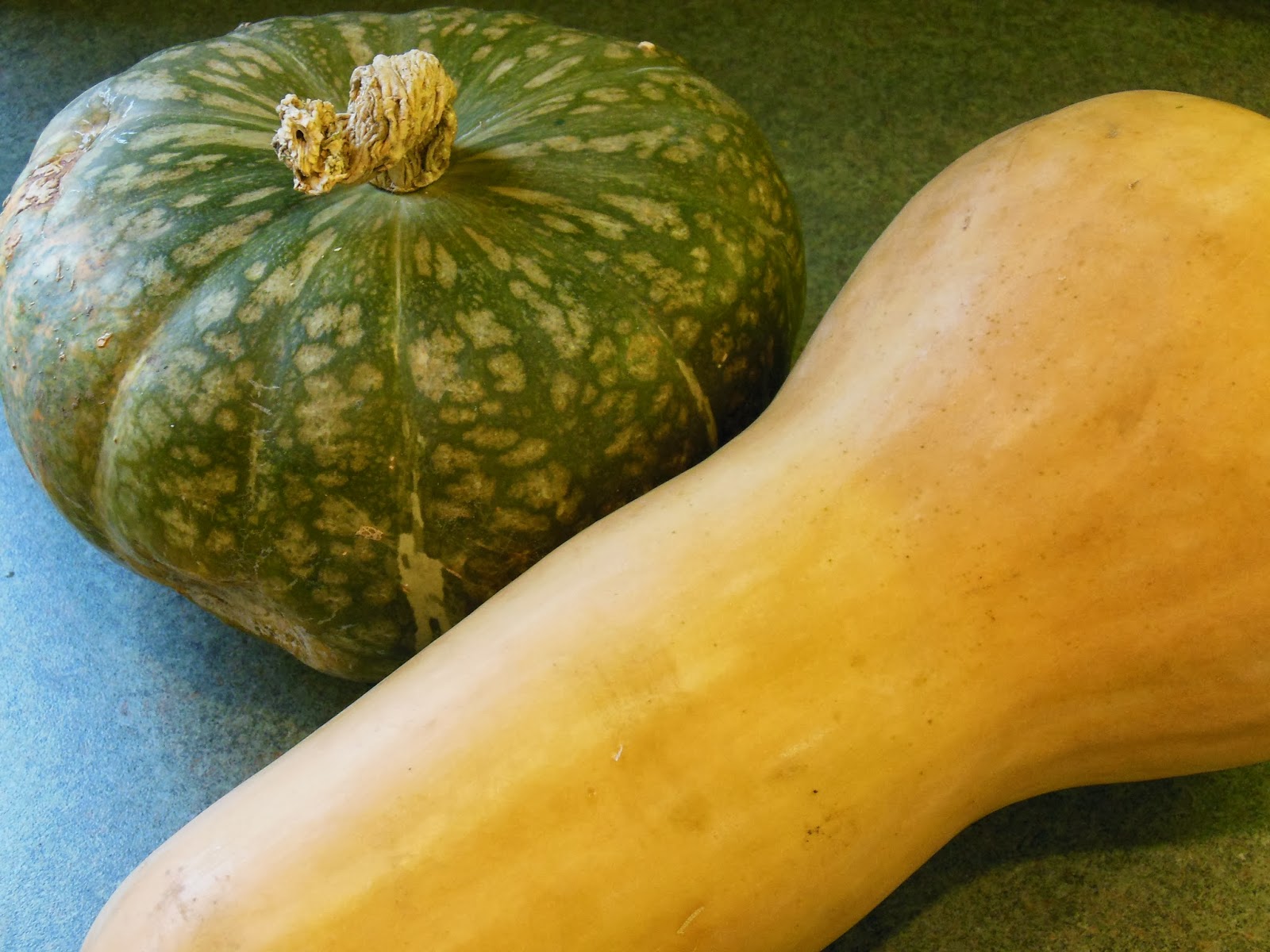
Have you ever played squash? Someday when I also learn to play cricket, I'll dabble in the sport of squash. For now, the only squash that gives me a workout comes from the garden. This time of year, your winter squash is begging to get cooked. Check for signs of spoilage. If it looks good, wash it, chop it in half (use an axe or drop it from the rooftop for a hubbard), remove the seeds, wrap it in foil, place it on a baking sheet and cook for about 2 hours on 350 F. It's ready when you can scoop it like soft ice cream. If you want to hide it in something, you may want to puree it in the blender or a food processor. Now what to do with it? Here are a couple delicious recipes for winter squash (butternut, acorn, buttercup, hubbard, pumpkin etc.). My kids won't eat plain squash, so we cheat and hide it in homemade macaroni and cheese, chocolate cake, carrot cake, chili, broccoli cheese soup (they don't eat the broccoli either).

  For Squash Mac & Cheese you'll need:

  • 1/4 cup butter
  • 1/4 cup flour
  • 1 Tbsp. salt
  • 1 tsp. onion powder (use fresh if you like)-1 small onion, chopped
  • 1/4 tsp. black pepper
  • 1/4 tsp. garlic powder (use fresh if you like)-3 cloves, minced
  • 1-2 c. milk
  • 2 c. squash puree
  • 1 c. shredded cheddar cheese (not packed)
  • 12 oz. of your favorite noodles
In a large pot fill halfway with water for the noodles. Place on high heat on the stove. Add noodles when it boils and cook until al dente. In the meantime, in a medium saucepan, melt butter on medium heat. Sautee onions and garlic if using fresh, until cooked through, but not browned. Add spices  Stir in flour and let sizzle for a few seconds. Stir in milk until sauce is smooth. Stir in puree and cheddar cheese. Stir frequently until sauce thickens. To thin it add more milk. Mix with noodles and serve hot. My kids devour it, blissfully unaware that it's a "witta bit hewfy."
For Broccoli Cheese Soup, just add half the usual cheese and maybe some more milk to your regular recipe:
I found a carrot and butternut squash cake at bakerette.com. We harvested last season's carrots this week at the RPCG, so I really needed a home for the carrots. Plus we used our homemade applesauce. I cooked these in a muffin tin and they worked just fine:
These were a huge hit. The kids definitely made a racket over these! The broccoli cheese caused a different kind of racket. Sometimes cheaters prosper, right?


Tuesday, January 21, 2014

Buried Treasure

Imagine a catastrophe in which the stores and your home ran out of food in the frozen depths of January. For hundreds of miles around you. City dwellers in and around Germany near the end of World War II faced such a food crisis. One of the founders for Rose Park Community Garden served a mission for his church in postwar Holland. He heard story after story of desperation and creativity when food became scarce. A year ago I dreamed that a natural disaster struck and I went to the community garden. There I found a line of people standing in the snow on a cold night. At the front of the line were 2 gray-haired men with shovels. They were digging up carrots and parsnips to keep the people fed. Tears of gratitude streamed down my face and I woke up feeling immensely thankful. The two men were Ralph and Scott Steenblik. And the carrots and parsnips were treasure. We dug up some buried treasure this past Saturday and nothing could be sweeter.

Wednesday, November 27, 2013

Thanksgiving Blessings

What would a Community Garden be without a harvest feast, where friends and family gather and give thanks? Our recent gathering has been for November work days, but most of us will be enjoying a garden gift at our table tomorrow. Part of our mission statement is that we "connect people to heritage." What is heritage? Think of your Thanksgiving Day, especially the dinner. Think of what makes the experience right. Is it a tradition, the food, particular people? Is it a pastime, prayer, story or song? I've heard that we take our culture for granted until it's missing. Then we notice. American food culture is somewhat of an oxymoron, except at Thanksgiving. Here's some food for thought. A  woman displaced by a hurricane whose Thanksgiving dinner--bought and baked by volunteers--was ruined by cranberries in the stuffing. An NPR commentator who refused Alton Brown's advice to not baste the turkey (skin repels juices, oven temperature goes down = longer time in the oven = dry bird). Even I discovered that dry stuffing disrupted my Thanksgiving observance one year. Certainly cranberries, basting, and dry stuffing are mere trifles when we consider our enormous blessings: home, friends, family, health, country, religion, food, and nature to name a few. Still, if you notice what makes your traditions, your holidays, your get-togethers feel right, you'll begin to appreciate your culture. And when you ask who made these gifts possible, who tilled, who planted the seeds for your rich harvest, there you will find your heritage. To whom all thanks belongs.